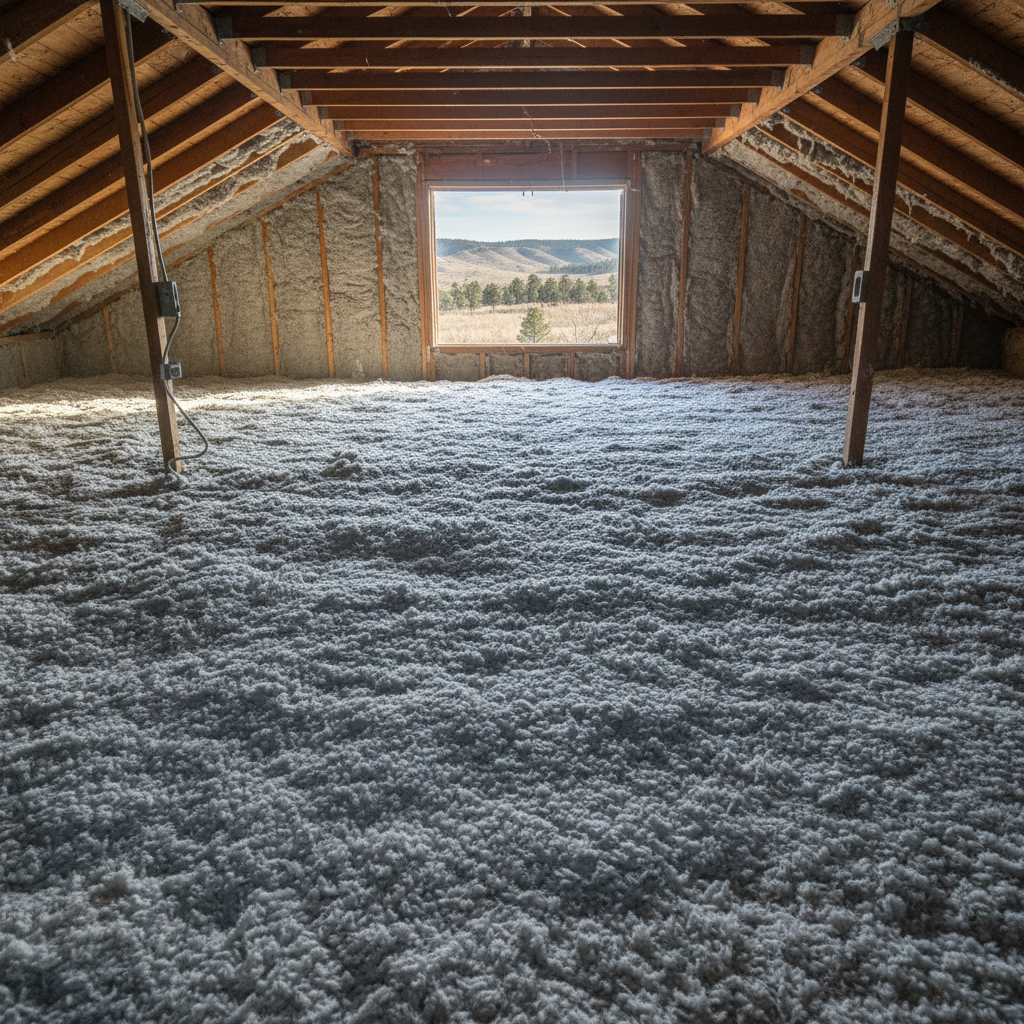
Alright, let's talk money. You're probably thinking about upgrading your insulation, specifically to blown-in, and naturally, you want to know what that's going to set you back here in Rapid City. Smart move, by the way. Good insulation really saves you a bundle on heating and cooling, especially with our wild Black Hills weather.
What Makes Blown-In Insulation Cost What It Does?
Look, there's no single price for this kind of work, and anyone who tells you otherwise isn't being straight. Here's what we look at when we're putting together a quote for you:
- The Type of Material: For blown-in, you've mainly got two choices: cellulose or fiberglass. Cellulose usually comes from recycled paper, treated to resist fire, and it's often a bit denser. Fiberglass is, well, fiberglass – tiny glass fibers, you know? Both work well, but they have different R-values per inch and cost slightly different amounts per bag. Fiberglass tends to be a touch cheaper per bag, but sometimes you need more of it to hit the R-value you're aiming for.
- How Much Insulation You Actually Need (R-Value): This is a big deal. R-value measures how well something resists heat flow. The higher the R-value, the better it insulates. For attics in our climate zone (that's Zone 6 for Rapid City, if you're curious), the Department of Energy suggests R-49 to R-60. If your attic has almost no insulation right now, getting to R-60 will take way more material than if you're just adding to existing R-19.
- The Size of the Area: This one's pretty simple – a bigger attic or wall cavity means more material and more time for us to install it. We measure everything in square feet.
- How Easy It Is to Get To: Is your attic a breeze to access? Or is it a tight crawl space? Are there a bunch of things in the way, like old ductwork or recessed lighting? If we have to snake hoses around or work in a super cramped spot, that takes more time and effort, which affects the labor cost. Sometimes, especially in older homes around places like West Boulevard, attics can be surprisingly tricky to get into.
- Prep Work & Clean Up: Do we need to pull out old, useless insulation first? That adds an extra cost for labor and getting rid of it. Do we need to air seal beforehand? That's a separate, but often super important, step that adds to the total. Good contractors, like us, always include a thorough cleanup as part of the job.
What Blown-In Insulation Usually Costs in Rapid City
Okay, let's get down to brass tacks. For most homes in Rapid City, getting blown-in insulation installed in an attic – assuming it's not a complete tear-out – you're generally looking at:
- For topping off existing insulation (say, going from R-19 to R-49 or R-60): Expect to pay somewhere between $1.20 to $2.00 per square foot. This covers both the material and our labor. So, a 1,500 sq ft attic might run you anywhere from $1,800 to $3,000.
- For a full install in an empty attic (like new construction or after old insulation removal): This will be higher, closer to $2.50 to $3.50 per square foot, and sometimes even more if there's a lot of prep work. That same 1,500 sq ft attic could be $3,750 to $5,250+.
Keep in mind, these are just averages. A small, simple attic might be on the lower end, while a complex, hard-to-reach job will definitely be higher. Wall cavity insulation is a whole different animal, usually costing more per square foot because it's tougher to get the material in there evenly.
What Your Quote Should Include
When Oasis Insulation Company gives you a quote – or any reputable company, really – here's what you should expect to see spelled out in detail:
- The exact type of blown-in material (cellulose or fiberglass).
- The target R-value you'll actually hit.
- The total square footage of the area we're insulating.
- The cost of all the materials.
- The cost of our labor.
- Any extra services, like air sealing, installing baffles (to keep insulation from blocking soffit vents), or removing and disposing of old insulation.
- A clear timeline for when the project will happen.
- Warranty information for both the product and the installation itself.
If a quote is just a single number with no breakdown, you should definitely ask questions. A good contractor will be totally transparent.
How to Avoid Paying Too Much
Nobody wants to get ripped off, especially when you're trying to make your home better. Here are my tips:
- Get Multiple Quotes: This is probably the most important thing you can do, honestly. Don't just go with the first company you call. Get at least three detailed quotes from different local contractors. This helps you compare not just the price, but also what's actually included.
- Compare Apples to Apples: Make sure each quote is for the same R-value and covers the exact same work. If one contractor quotes R-38 and another R-60, you're not comparing the same job at all.
- Ask About Air Sealing: Your insulation is only as good as your air barrier. If your attic isn't properly air-sealed, you'll still have drafts and lose heat. Many contractors will include basic air sealing (like around penetrations) in their quote, but some consider it an add-on. Make sure you know what's covered.
- Check References and Reviews: See what other Rapid City homeowners are saying about the contractors you're thinking about hiring. Word of mouth and online reviews can tell you a lot.
- Don't Fall for High-Pressure Sales: If someone's pushing you to sign right away or offering a 'today-only' discount, that's a big red flag. Take your time, do your research.
Putting money into blown-in insulation is one of the best home improvements you can make for both comfort and saving energy. Do your homework, get solid quotes, and you'll be warm in the winter and cool in the summer without emptying your wallet.